writing
When it comes to writing, another huge topic and huge part of our skill set like reading, I feel more is said. Or at least I have read more about how academics and related scholars do it. The famous writer’s desk concept and related photos that you sometimes see floating around are what inspired me to buy (and even extend) my large desk, buy more than one keyboard and mouse based on trial-and-error until I found the combinations I like, and I probably will buy a new desk chair soon too. And so below, I will spell out how I do most of my writing.
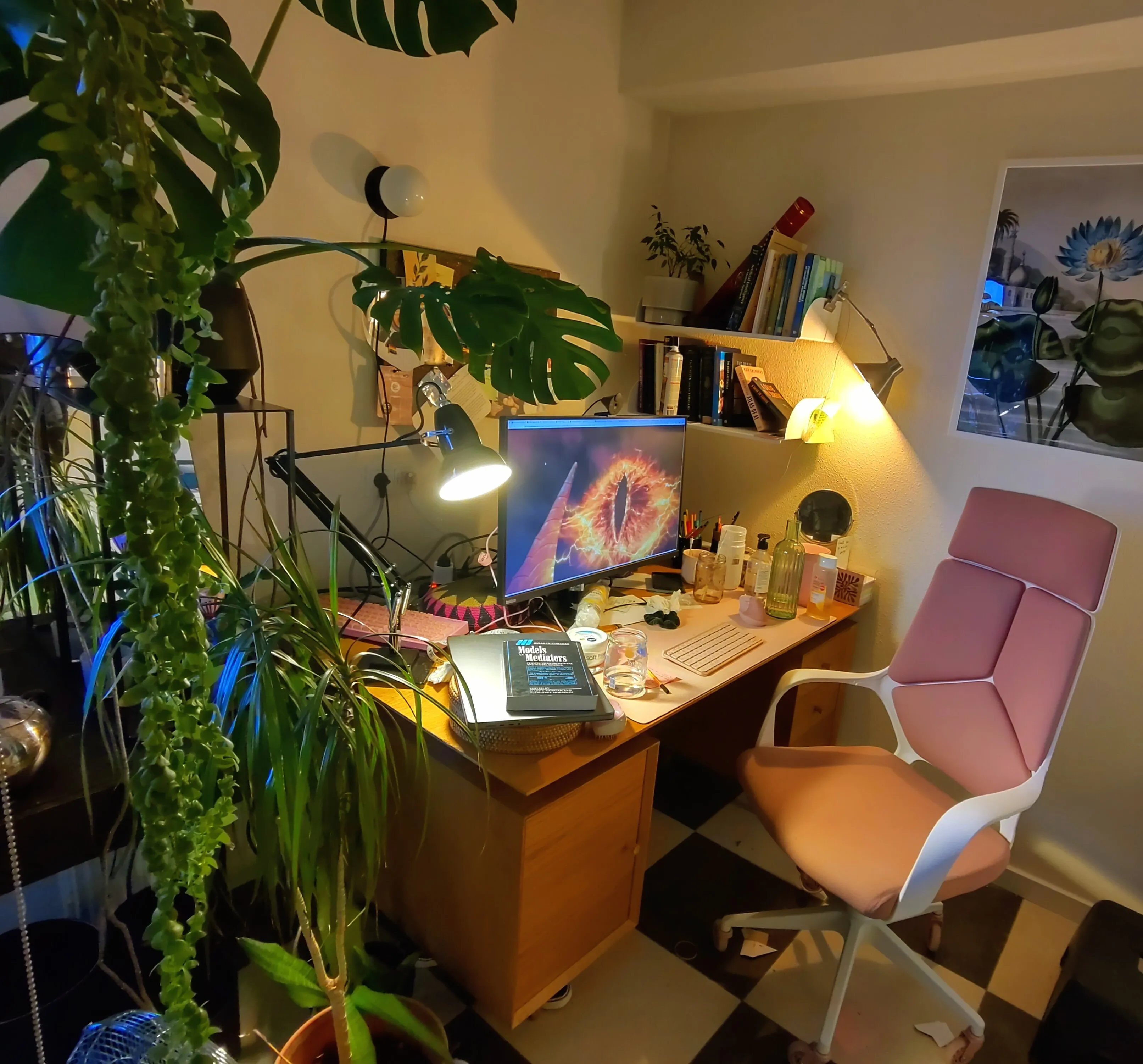
One huge requirement for me is to be able to write without any formatting other than that provided by plain text: the ability to write paragraphs, indicate where italics and bold are, make lists, insert images, but no style per se in the area I am writing text. I need to write without distractions in the place my text is. I struggle to concentrate if I need to worry about formatting, indentation, fonts — in fact much like the writers before computers became the main tool, I prefer (need, to be honest) to type in a monospace font, in a monochrome window, with help to do references but no GUIs or distractions.
I say this because, I have no idea if people realise how important this is and how damaging things like Microsoft Word are to my ability to write. I basically cannot write in Word and will freeze up; neurodivergence is just like that, I guess. In my experience this fact about my process is shocking, almost unbelievable, to some colleagues, but a plain text editor is more widely available, and infinitely cheaper, than Word and its clones — and in a way WYSIWYG editors are ghastly if you think about it: why simulate paper on a machine that contains none? You can add that in, and so much more, later anyway, which I also enjoy doing… just not while I am trying to write!
Typewriters are just text. My writing is also just text. Why share this if it’s idiosyncratic? I mean, I suspect it’s not that unusual, but it is less said than other aspects of writing I have seen discussed, and certainly Word, and Microsoft in general, is an evil and honestly irrelevant piece of software, and a nightmarishly vile company, that we as academics especially should strive to remove from our work lives.Remember annoying stuff in Word?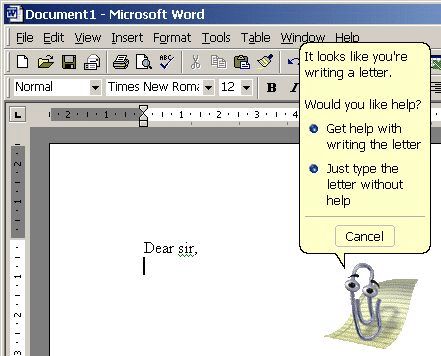 If you struggle, consider a free clone of Word. But if you also struggle to concentrate, maybe it’s useful to try just plain text like me? It’s unbelievably freeing.
In terms of the subjective experience of writing, I often find that writer’s block is usually complicated by the fact that I do not experience it as others seem to describe it, which like maybe things like “impostor syndrome” is a sign it’s actually nonsense. In the case of so-called impostor syndrome, it’s just a kind of gross if you think about it medicalisation of the feeling of not being accepted by a community, of even being bullied, and of the related lack of confidence one will naturally feel when they are subject to such alienation. Why call the effects on a woman from structural sexism, for example, a “syndrome” as if it’s something with a main or exclusive locus of causation and control inside the affected person? If somebody bullies you, why is there something wrong with you? Seems like there is something very wrong with the bully. Much like depression due to being ostracised is a normal (maybe even healthy to an extent) reaction, feeling “like an impostor” is the result of being excluded one way or another by external forces. Anyway call it what you like, I guess, but recognise the problem is not you — and also seek out and build, when possible, better communities. It’s hard for somebody with a PhD in Psychology to use syndrome, psychosis, etc., in such flippant ways to the people most affected though. But, I digress.
Writer’s block, I think — and I really can only guess — usually comes from the perhaps wrongheaded notion that when I sit down to write that I just sit and it pours out.I can only speak for myself of course. If you never had this misunderstanding, carry on! But even if it looks like that, that has no basis in reality: do not imagine if it looks easy and quick, that the process was easy or quick. Don’t fall into the trap of thinking that “because things look a certain way, that therefore they are a certain way.” Every event that may look like “she just picked up the keyboard and wrote six paragraphs” has been preceded by weeks, if not months and years, of thinking about, and especially reading about, this issue. Years of training — and do not forget if you do not have a PhD done and dusted yet, that a UK-style monograph PhD (which I finished and continued to build my skills from fifteen years ago) is usually at least one year or 100% non-stop writing at the end — have gone into my ability to just write out what I have spent the last few months thinking about. This is the life of the academic, and you may be tasting it too if you’re just starting out your journey: good luck!
So that’s what it isn’t. What is then the feeling, because of course I grant it’s a blockage, of the block? It’s the lack of preparing, of knowing that the very first, zeroth even, step to write is to think and read deeply about the topic, sometimes I even draw or doodle, I bought a whiteboard, etc. If you want or need to write about something, start reading about it. Or find what it is that helps you. It’s unlikely you can just start writing about that something if you feel a block. And it’s not procrastination either. It’s the required way to start to write.
I will add more here, but for now here’s all that above…